
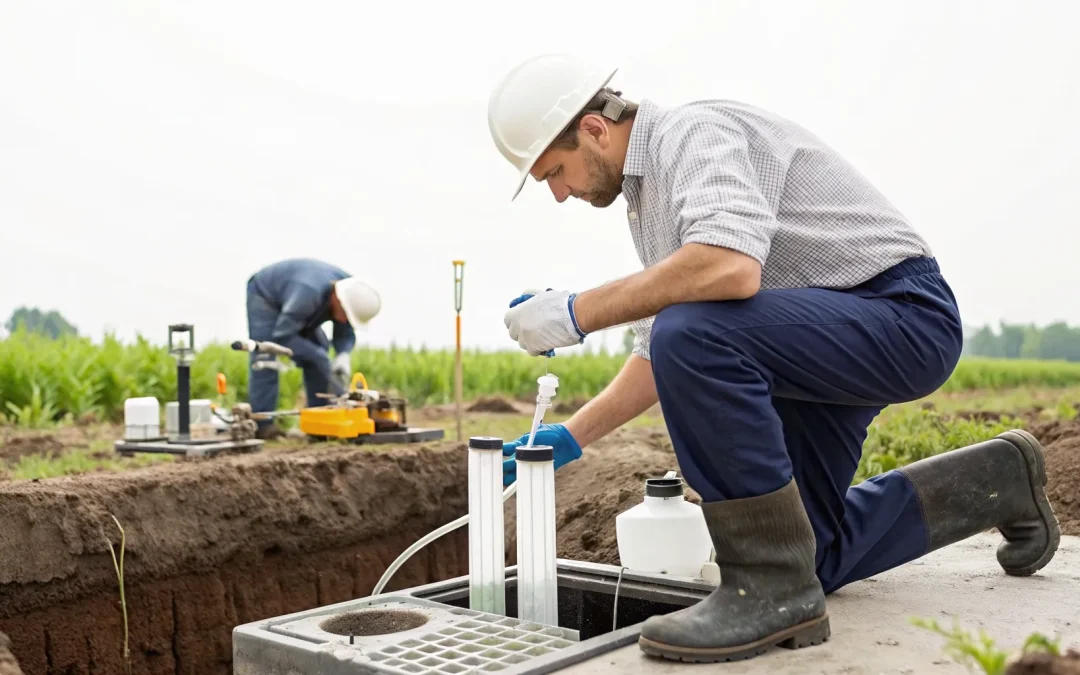
Get a Septic System Design That Saves You Time, Money & Headaches
Avoid rework, prevent delays, and get fully compliant septic plans engineered specifically for your property. Land Perc provides clear designs, accurate soil data, and smooth permitting so your project moves forward without surprises.
Start a New OrderA failing septic system is a builder’s worst nightmare, leading to costly repairs, environmental hazards, and unhappy clients. The most common reason for failure isn’t faulty equipment; it’s a system designed for the wrong type of soil. The ground’s ability to absorb and treat wastewater is the most critical factor for long-term success. That’s why a soil percolation test for septic installation is so essential. It acts as a diagnostic tool, giving us a clear picture of your site’s drainage capabilities. This guide explains how this simple test provides the data we need to design a compliant, effective system that prevents backups and protects groundwater from day one.
Key Takeaways
- Your septic design depends on the perc test: This mandatory Florida test measures soil absorption to determine the correct size and type of septic system, ensuring your design is both effective and permittable from the start.
- A failed test points to a solution, not a stop sign: A failing result simply means a conventional system won’t work; it provides the specific data needed to select the right engineered solution, like a mound system or ATU, to keep your project moving forward.
- Hire a professional to avoid costly delays: An expert understands Florida’s complex soil, high water tables, and local county codes, ensuring you get accurate, compliant results that prevent permit rejections and redesigns.
What Is a Soil Percolation Test and Why Do You Need One?
If you’re building on a property without access to a municipal sewer system, a soil percolation test, or “perc test,” is one of the first and most important steps you’ll take. In simple terms, a perc test measures how quickly water absorbs into the ground. This rate of absorption is the single most critical factor in determining if a site is suitable for a septic system and, if so, what kind of system will work effectively and safely for years to come. It’s not just about digging a hole and pouring water in; it’s a scientific measurement that provides the data needed for a sound engineering decision.
Think of it as a feasibility study for your wastewater management. The results of a perc test directly influence the septic system design, dictating the size and type of drainfield needed to handle the property’s wastewater. Getting this right from the start prevents system failures, protects the local environment, and ensures your project moves forward without costly delays. In Florida, it’s not just a good idea; it’s a mandatory step for getting your building permits approved. Without a passing perc test, a construction project can be stopped in its tracks, turning a promising lot into an unbuildable one.
How Soil Absorption Affects Your System
The goal of a perc test is to find the “sweet spot” for soil drainage. If water drains too quickly, as it often does in very sandy soil, wastewater won’t spend enough time in the drainfield to be properly treated. This can lead to harmful bacteria and nitrates contaminating groundwater. On the other hand, if water drains too slowly, which is common in soil with high clay content, the drainfield can become saturated. This causes wastewater to pool on the surface or back up into the property, creating a messy and hazardous situation. The test results tell us exactly what kind of soil we’re working with and what type of system will function best for the long haul.
Protect Groundwater and Public Health
A properly functioning septic system is a self-contained wastewater treatment plant. The soil itself acts as a natural filter, cleaning the effluent before it returns to the water table. A perc test ensures that this natural filter can do its job effectively. When a system is designed based on accurate soil data, it prevents untreated wastewater from reaching drinking water sources, lakes, and streams. This is especially important in Florida, where the water table is often high and the ecosystem is sensitive. By performing a thorough soil and percolation test, you are doing your part to protect both the environment and the health of the community.
Meet Florida’s Septic Requirements
In Florida, state and local health departments have strict regulations for onsite sewage treatment and disposal systems. A perc test is a required component of the permitting process for any new septic system installation. The results must be documented and submitted by a qualified professional to demonstrate that the site is suitable for development. For builders and permit coordinators, a failed perc test can mean a complete halt to a project. That’s why it’s so important to work with an experienced team that understands local soil conditions and permitting and compliance rules. Getting an accurate test done right the first time saves you from redesigns, delays, and the potential loss of a buildable lot.
How a Soil Perc Test Works
A soil percolation test, or “perc test,” is a straightforward field test that measures how quickly water drains through your soil. Think of it as a preview of how well your future drainfield will handle wastewater. The process is methodical and designed to give a clear picture of your site’s conditions, ensuring the septic system we design is both effective and compliant. Let’s walk through the steps involved.
Step 1: Prepare the Site and Assess Conditions
Before any digging begins, the first step is a thorough site assessment. We need to identify the best possible location for the proposed drainfield, avoiding areas with poor drainage, steep slopes, or proximity to wells and water bodies. This initial evaluation is critical because a failed perc test can halt a construction project in its tracks, especially on rural sites without access to municipal sewer systems. For builders, getting this right from the start saves time and money. A professional assessment ensures the test is performed in the most viable area, giving your project the best chance for approval.
Step 2: Dig and Saturate the Test Holes
Once the ideal spot is chosen, we dig a series of test holes. Typically, we create at least three to four holes, each about 4 to 12 inches wide and up to 30 inches deep. After digging, we roughen the sides of each hole to encourage natural water absorption. Then comes the most important part of the preparation: pre-soaking the soil. We fill the holes with water and keep them saturated for at least four hours, or even overnight. This step simulates the consistent moisture the soil will experience from a functioning septic system, preventing the dry ground from giving a misleadingly fast absorption rate.
Step 3: Measure Water Drop Rates and Calculate Results
With the soil fully saturated, the actual test can begin. We fill each hole with water to a specific depth, usually six inches, and then the clock starts. We carefully measure how much the water level drops over a set period, typically 30 minutes. This process is repeated until we get a stable, consistent drop rate. The final calculation is simple but crucial: we divide the total time in minutes by the total drop in inches. For example, if the water level drops two inches in 30 minutes, the percolation rate is 15 minutes per inch (mpi). This number is the key data point we use in our septic system design.
Step 4: Document Results for Permitting and Compliance
The final step is to take all the data we’ve collected and compile it into an official report. This isn’t just for your records; it’s a required document for the local health department and permitting authorities. The report details the test procedure, soil observations, and the final percolation rates for each hole. Accurate and thorough documentation is essential for demonstrating that your site meets Florida’s environmental and safety codes. At Land Perc, we handle all the paperwork to ensure your project moves through the permitting and compliance phase smoothly, providing the certified results you need to keep construction on schedule.
What Do Your Perc Test Results Mean?
Once the soil percolation test is complete, you’ll receive a set of numbers that tell a crucial story about your property. These results aren’t just a pass or fail grade; they are the blueprint for designing a safe and effective septic system. The rate at which water moves through the soil dictates everything from the size of the drainfield to the type of system required to meet Florida’s health and environmental codes.
Understanding these figures is the first step toward a successful installation. A fast percolation rate might seem good, but it can pose a risk to groundwater. A slow rate can lead to system backups and surface pooling. Your results provide the specific data needed to engineer a solution that works with your site’s unique conditions, ensuring long-term performance and compliance.
Understand Drainage Rates and Soil Suitability
The core purpose of a perc test is to measure the soil’s absorption rate, usually expressed in minutes per inch (MPI). This number tells you how long it takes for the water level in the test hole to drop by one inch. Think of it as a speed limit for water moving through the soil. This rate is critical because the soil in the drainfield needs to treat wastewater before it reaches the groundwater.
If the soil is too porous, like coarse sand, water will pass through too quickly for beneficial bacteria to break down contaminants. If the soil is too dense, like heavy clay, it won’t absorb water fast enough, leading to system failure. The goal is to find a “just right” drainage rate that allows for proper treatment without causing backups. This measurement is a fundamental part of our septic system design process, ensuring the final plan is perfectly suited to your site.
The Difference Between a Passing and Failing Grade
In Florida, a perc test “passes” if the soil absorption rate falls within an acceptable range. A rate faster than 5 MPI means the soil is too permeable, and wastewater could contaminate groundwater before it’s adequately treated. A rate slower than 60 MPI indicates the soil is not permeable enough, which can cause effluent to surface or back up into the home.
A failing grade doesn’t mean you can’t build on the property. It simply means a conventional septic system isn’t the right fit. The specific reason for the failure, whether it’s soil type, a high water table, or proximity to bedrock, will point toward the appropriate engineered solution. You can find answers to more specific questions on our FAQs page.
How Results Impact Septic System Design
Your perc test results are the most important factor in determining the septic system’s design and size. The MPI directly influences the required square footage of the drainfield. Slower draining soils require a much larger absorption area to handle the same daily wastewater flow as faster-draining soils. This ensures the system doesn’t get overwhelmed.
If your soil fails the perc test, the results will guide us toward an alternative system. For slow-draining soils, an engineered solution like a mound system might be necessary to create an effective treatment area. For fast-draining soils, a system with a special filter media may be required to ensure proper treatment. Whatever the outcome, the test results provide the data needed to design a compliant and functional system. When you’re ready to move forward with a design, you can start a new order with us.
Common Reasons a Soil Perc Test Fails
A “failing” perc test doesn’t always mean your project is a no-go. It simply means the soil conditions on-site won’t support a conventional septic system. The test is all about finding a happy medium for drainage. If water moves too quickly, it can’t be properly treated before reaching the groundwater. If it moves too slowly, you risk backups and surface pooling. Several factors, from soil composition to the water table, can cause a test to fail. Understanding these common reasons is the first step toward finding the right engineered solution for your build. At Land Perc, we’ve seen it all and can help you find a path forward.
Soil Drains Too Fast (Sandy Soil)
It might seem counterintuitive, but soil that drains too quickly is a problem. When a perc test shows water disappearing faster than about five minutes per inch, it’s a red flag. This usually happens in very sandy or gravelly soils, which are common in many parts of Florida. The issue is that the wastewater, or effluent, rushes through the soil without enough contact time for natural filtration and treatment to occur. Harmful bacteria and nitrates can then contaminate the groundwater, which is a serious environmental and public health risk. A conventional drainfield simply won’t work in these conditions because the soil isn’t doing its job as a filter.
Soil Drains Too Slow (Clay Soil)
On the other end of the spectrum is soil that just won’t drain. If your perc test results show a rate slower than 60 minutes per inch, you’re likely dealing with heavy clay or compacted silt. This type of soil holds onto water, preventing effluent from being absorbed. Instead of percolating down, the wastewater will pool on the surface of the drainfield, creating a soggy, smelly mess. In a worst-case scenario, it can even back up into the property’s plumbing. These conditions make a standard septic system impossible, but it’s a common challenge we solve with a specialized septic system design tailored to the site’s unique limitations.
High Water Table or Seasonal Saturation
Florida’s geography means we often encounter high water tables, especially during the rainy season. A perc test will fail if the groundwater level is too close to the proposed drainfield area. The soil is already saturated with water, leaving no space for the septic effluent to be absorbed and treated. The Florida Health Department requires a specific separation distance between the bottom of the drainfield and the seasonal high water table to prevent contamination. When this distance can’t be met, a conventional system isn’t an option. It’s a critical measurement that protects both the septic system’s function and the local water resources.
Shallow Bedrock or Impermeable Layers
Sometimes, the problem isn’t the soil itself but what lies just beneath it. If our team hits solid bedrock, limestone, or a dense, impermeable layer of clay (often called hardpan) close to the surface, the test will fail. These layers act like a solid floor, physically blocking water from draining any further. There’s simply nowhere for the effluent to go. A conventional drainfield needs several feet of suitable soil below it to function correctly. When bedrock is shallow, there isn’t enough vertical space for proper treatment. This is another situation where an alternative system is required, and our team can help you explore engineered solutions that work with your site’s geology.
What to Do When Your Soil Fails the Perc Test
Getting the news that your soil failed its perc test can feel like a major setback, but it’s not a dead end for your project. It simply means a conventional septic system isn’t the right fit for your site’s specific conditions. Think of it as a detour, not a stop sign. The soil on your property might drain too quickly (common in sandy soils) or too slowly (typical with heavy clay), or maybe the seasonal water table is just too high. Whatever the reason, this result is actually valuable information that protects the future homeowner, the property, and the local environment.
A failed perc test is the first step toward finding a more specialized solution that will work safely and effectively for years to come. Instead of relying on a standard gravity-fed system, you’ll likely need an engineered or advanced septic system. These systems are designed to overcome challenging soil conditions by providing a higher level of wastewater treatment before it ever reaches the ground. This ensures that effluent is properly treated, preventing potential groundwater contamination and premature system failure. At Land Perc, we specialize in creating custom septic system designs that meet Florida’s strict codes while accommodating the unique challenges of your property. We see these challenges every day and have a full playbook of solutions ready to go. So, take a deep breath, your project is still on track.
Use an Advanced Septic System
When a conventional system is off the table, an advanced septic system is your go-to solution. These systems are engineered to work in environments where standard systems would fail, like properties with clay soil, a high water table, or shallow bedrock. An advanced system provides an extra layer of treatment, using components like pumps, filters, and other technologies to clean the wastewater more thoroughly. This process ensures the water released into the drainfield is significantly cleaner, reducing the risk of groundwater contamination and system failure. Working with an expert is key to selecting and designing the right advanced system for your site’s specific needs.
Install a Mound System or Aerobic Treatment Unit (ATU)
Two of the most common advanced systems are mound systems and aerobic treatment units (ATUs). A mound system is essentially an engineered drainfield built above the natural ground surface. It uses a specific type of sand fill to create an ideal environment for treating wastewater, which is perfect for sites with slow-draining soil or a high water table. An ATU, on the other hand, functions like a small-scale wastewater treatment plant for your property. It pumps oxygen into the treatment tank, which encourages the growth of aerobic bacteria to break down waste far more effectively than a conventional anaerobic system. The highly treated water from an ATU is then safely dispersed into the soil. Both are fantastic, reliable solutions when soil conditions are less than ideal.
Explore Other Engineered Solutions
Every property in Florida is unique, and sometimes a standard mound or ATU system isn’t the perfect fit. That’s where other engineered solutions come into play. Depending on the specific reason your perc test failed, a custom design might be necessary. For instance, if your soil drains too quickly, a special soil layer can be added to the drainfield to slow down absorption and ensure proper treatment. The key is to work with a team that has deep experience with Florida’s diverse soil types and local health department regulations. Before you even purchase a lot, it’s wise to make the offer contingent on passing soil and perc tests. If you’re already facing a failed test, don’t worry. Start an order with us, and we can explore the best-engineered solution for your project.
Common Perc Test Challenges for Builders
A perc test might seem like a simple box to check on your project plan, but several on-the-ground issues can pop up and cause serious delays. As a builder, staying ahead of these potential hurdles is key to keeping your project on schedule and within budget. From unpredictable Florida weather to tricky site conditions, knowing what to expect can make all the difference between a smooth process and a frustrating setback. Understanding these common challenges helps you plan effectively and avoid unnecessary headaches.
Handling Weather and Seasonal Changes
Florida’s weather is anything but predictable, and it has a major impact on soil conditions. Conducting a perc test during the dry season might give you favorable results, but it doesn’t show the full picture. The high water table during our rainy summer months can completely change how soil drains. That’s why it’s often best to test during wetter periods. This gives you a “worst-case scenario” reading, ensuring the septic system we design is robust enough to function properly year-round, even when the ground is saturated. It’s a proactive step that prevents costly failures and ensures the system meets Florida’s environmental codes.
Overcoming Site Access and Equipment Issues
Getting the right equipment to the right spot can be a challenge, especially on undeveloped lots with dense vegetation or sandy terrain. A proper perc test requires specialized machinery like an excavator or auger and a large water source, which isn’t always easy to maneuver. Before we even begin, it’s important to assess the property for clear access points. Planning a path for our equipment ahead of time prevents delays on testing day. By coordinating with our team, you can ensure the site is prepped and ready, allowing us to get in, get the job done efficiently, and keep your project moving forward.
Dealing with Inconsistent Soil Across a Property
You’d be surprised how much soil composition can change over just a few feet. One spot might have perfect sandy loam, while an area ten feet away could be dense clay. This is why relying on a single test hole is a recipe for disaster. We always conduct multiple tests across the proposed drainfield area to get an accurate understanding of the site. If we find wildly different percolation rates, we don’t average them. Instead, we use the slowest draining result to guide the septic system design. This conservative approach guarantees the system is built for the land’s true capacity, ensuring long-term performance.
Staying on Top of Local Code Compliance
Florida’s septic regulations are strict, and they can differ from one county to the next. What passes in Hillsborough County might not meet the requirements in Collier County. Keeping up with these specific local codes is a full-time job, and a misstep can lead to rejected permits and significant project delays. A licensed professional who works in the area every day will be familiar with the local health department’s specific testing protocols and documentation requirements. Working with an expert ensures your perc test is performed correctly the first time, providing the accurate data needed for a smooth permitting and compliance process.
How to Get Accurate and Reliable Test Results
Getting an accurate perc test result is the foundation of a successful septic system design. It’s not just about passing or failing; it’s about gathering the precise data needed to design a system that works efficiently for decades. A flawed test can lead to incorrect system designs, causing frustrating permit delays, unexpected construction costs, or even premature system failure. While the process might look straightforward, a few key practices separate a reliable test from a risky guess. Let’s walk through what it takes to get it right.
Follow Best Practices for Test Preparation
Before any digging begins, the first and most critical step is safety. You must call 811 at least a few business days before you plan to test. This free national service, often called “Call Before You Dig,” prompts local utility companies to visit your site and mark the approximate location of any underground lines, like gas, electric, and water. Hitting a utility line isn’t just a costly mistake; it’s incredibly dangerous. Making this call is a non-negotiable part of site preparation that protects your crew, project, and budget from preventable disasters.
Choose the Right Test Locations and Timing
Where and when you test matters just as much as how you test. You’ll need to dig at least three to four test holes directly in the proposed drainfield area to get a clear picture of the soil conditions. These holes should be about 4 to 12 inches wide and dug to the depth of the planned system, typically 24 to 30 inches. It’s also smart to consider the season. Testing during Florida’s wetter months can give you a “worst-case” reading. This data helps us design a system robust enough to handle the highest anticipated water levels, ensuring long-term performance.
Why You Should Hire a Professional (Not DIY)
While it might be tempting to try a DIY perc test to cut costs, this is one area where professional expertise is essential. A perc test is more than just digging and measuring; it involves a deep understanding of soil types, hydrology, and Florida’s specific environmental health codes. An experienced professional knows how to interpret the results accurately, spot inconsistencies across a site, and prepare the documentation needed for a smooth permitting process. Working with a certified team ensures your results are reliable and compliant, preventing the costly delays and redesigns that can derail a project timeline.
Related Articles
- Septic Systems Explained: The Ultimate 2025 Guide
- Septic Permits in Florida: Do You Need One? (2025 Guide)
- Florida Septic System Design Requirements: A Guide
- Best Septic System Design: A Complete Guide
Frequently Asked Questions
My property failed the perc test. Does this mean I can’t build on it? Not at all. A failed perc test is common and simply means a conventional septic system isn’t suitable for your site’s soil conditions. Think of it as a guide pointing you toward a better solution. The results will tell us exactly why it failed, whether the soil drains too fast, too slow, or the water table is too high. From there, we can design an engineered or advanced system, like a mound system or an aerobic treatment unit, that is specifically built to work with your property’s unique challenges and meet all state codes.
Can I perform a perc test myself to save money? While it might seem like a way to cut costs, performing a perc test yourself is not a good idea. In Florida, the results must be documented and certified by a qualified professional to be accepted by the local health department for permitting. An experienced team understands the specific protocols, knows how to interpret complex soil conditions, and provides the official report you need to move forward. Hiring a professional from the start ensures the test is done correctly, preventing costly delays and the risk of designing an improper system.
When is the best time of year to conduct a perc test in Florida? The best time to test is during the wet season, or as close to it as possible. Testing when the ground is saturated and the water table is at its highest gives us the most accurate, “worst-case scenario” data. This information is crucial for designing a septic system that will function properly year-round, not just during dry conditions. A system designed based on dry-season data could fail once the summer rains arrive, so testing at the right time is a key part of ensuring long-term success.
How long does the entire perc test process usually take? The on-site portion of a perc test can typically be completed in one to two days. The first step involves digging the test holes and pre-soaking the soil for at least four hours, and often overnight. This saturation period is essential for accurate results. The next day, we take the measurements, which can take a few hours. After the fieldwork is done, we compile the data into a formal report for your permit application, which is usually ready within a few business days.
What if the soil seems good in one spot but bad in another? Soil composition can vary significantly across a single property, which is why we never rely on just one test hole. A standard perc test involves digging several holes throughout the proposed drainfield area to get a complete picture of the site’s conditions. If we find different absorption rates, we always use the slowest rate to guide the septic system design. This conservative approach ensures the system is built to handle the most challenging conditions on your lot, guaranteeing its effectiveness and longevity.