
Get a Septic System Design That Saves You Time, Money & Headaches
Avoid rework, prevent delays, and get fully compliant septic plans engineered specifically for your property. Land Perc provides clear designs, accurate soil data, and smooth permitting so your project moves forward without surprises.
Start a New OrderBuilding in Florida means working with a unique set of environmental factors, from sandy soils and high water tables to stringent local health codes designed to protect our groundwater. What works for a septic system in another state might be a recipe for failure here. That’s why determining the proper leach field size for a 3 bedroom home requires a deep understanding of our local conditions. A design that’s perfect for the clay-heavy soil of Central Florida won’t work on a sandy lot in the Panhandle. We’ll explore how Florida’s diverse soil types impact leach field design and what you need to know to ensure your project is successful.
Key Takeaways
- Balance Household Needs with Site Conditions: The right leach field size isn’t a guess; it’s a precise calculation based on the home’s number of bedrooms and the soil’s unique ability to absorb water.
- A Percolation Test Is Non-Negotiable: The only way to understand your soil’s drainage capacity is through a professional perc test. This single step provides the critical data needed to design a system that won’t fail.
- Expert Design Prevents Costly Mistakes: Working with a certified designer ensures your leach field plan meets Florida’s strict codes, passes inspection the first time, and provides a reliable, long-lasting system for the homeowner.
What Is a Leach Field and Why Does It Matter?
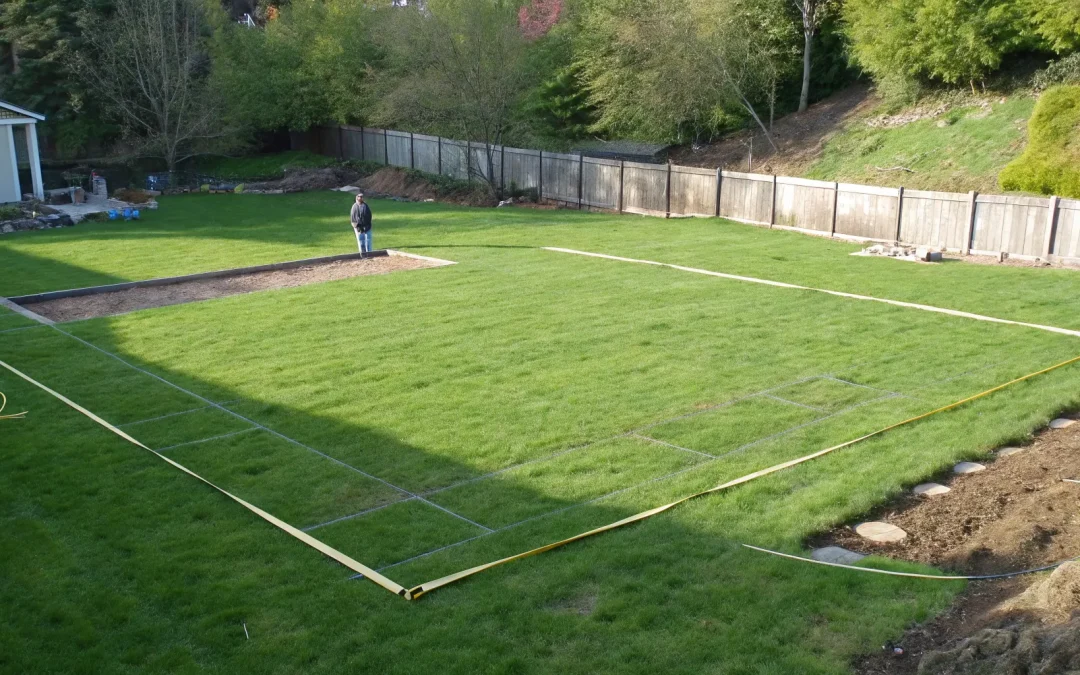
Think of a leach field as the final, hardworking stage of a septic system. After the septic tank separates solids and scum from liquid wastewater (effluent), that effluent needs a safe place to go. The leach field, also called a drain field, is that place. It’s an underground network of perforated pipes laid in gravel-filled trenches that allows the effluent to be slowly released and absorbed into the soil.
Getting the leach field right is non-negotiable for a functional and long-lasting septic system. A properly designed field prevents wastewater from pooling on the surface, backing up into the home, or contaminating the environment. For builders and installers, a well-planned leach field is key to passing inspections, avoiding costly rework, and delivering a reliable system that homeowners won’t have to worry about for decades. It’s the unseen hero that ensures everything runs smoothly and safely.
Its Role in a Septic System
The leach field is where the natural treatment process happens. The septic tank does the initial heavy lifting by separating solids, but the effluent that leaves the tank is still full of bacteria and pathogens. The leach field acts as a massive, natural filter. As the effluent trickles out of the pipes and into the surrounding soil, the soil itself goes to work. This soil absorption field is designed to disperse the wastewater over a large enough area to prevent oversaturation and allow for effective filtration. This is why our custom septic system design focuses so heavily on the specific conditions of your site.
How It Protects Local Groundwater
A properly functioning leach field is your first line of defense in protecting Florida’s groundwater. The soil isn’t just a sponge; it’s a living ecosystem. A healthy layer of biomat forms around the trenches, and microorganisms in the soil break down and digest harmful contaminants in the effluent. This natural process purifies the wastewater before it can reach the water table. When a leach field is correctly sized and installed, it ensures that only treated water re-enters the environment. This prevents contamination of wells, rivers, and aquifers, which is essential for maintaining the health of the local ecosystem and protecting public health.
How Big Should a Leach Field Be for a 3-Bedroom Home?
When you’re planning a septic system for a new build, one of the first questions that comes up is about size. It’s a fair question—you need to know how much land to allocate for the system. While there’s no single magic number that works for every project, we can start with a general range and then break down the factors that lead to a precise, site-specific measurement.
For a typical three-bedroom home, you can expect the leach field to be anywhere from 495 to 1,050 square feet. If the soil has a moderate absorption rate, a common estimate is around 750 square feet. Think of these numbers as a starting point, not a final answer. The final dimensions are determined by a combination of factors that are unique to each property, which is why a professional assessment is so critical for getting it right the first time.
Typical Size Requirements
As a rule of thumb, a three-bedroom home is designed to handle the wastewater needs of a typical family, which is why it’s the standard for sizing estimates. The assumption is that more bedrooms equal more potential occupants and, therefore, more daily water usage. This baseline helps establish a minimum size required for the system to function effectively without being overwhelmed. However, this initial estimate is just one piece of the puzzle. It doesn’t account for the most critical variable: the ground itself. That’s where a detailed site evaluation becomes essential to move from a rough guess to an accurate, reliable design.
Why Every Site Is Different
You can’t install the same leach field on a sandy lot in the Panhandle as you would in the clay-heavy soil of Central Florida and expect the same results. The size of your leach field depends entirely on site-specific conditions. Key factors include the quality of your soil and how quickly it absorbs water (its percolation rate), the projected daily water usage of the household, and local health and environmental regulations. Even the slope of the land plays a role. Because every property is unique, a one-size-fits-all approach is a recipe for system failure. A custom design based on thorough testing ensures the system is efficient, compliant, and built to last.
Key Factors That Determine Leach Field Size
When you’re planning a septic system, one size definitely does not fit all. The leach field, or drain field, is the unsung hero of the system, responsible for safely filtering wastewater back into the soil. Getting its size right is critical for long-term performance and avoiding messy failures. Several key factors come into play, and understanding them is the first step to a successful installation.
Soil Type and Percolation Rate
The ground beneath a property is the single most important factor in leach field design. The soil’s job is to filter and treat wastewater, and its composition directly impacts how large the leach field needs to be. Think of it like a coffee filter—some let water through faster than others. Sandy soils, for example, have a fast percolation rate, meaning they drain quickly and can often accommodate a smaller leach field. On the other hand, dense clay soils drain very slowly, requiring a much larger area to prevent wastewater from pooling and causing system backups. A professional soil analysis is the only way to know for sure what you’re working with and design a system that functions correctly.
Household Water Usage
Since we can’t measure exactly how much water a family will use, the industry standard is to size a septic system based on the number of bedrooms in a home. This provides a reliable estimate of the maximum potential wastewater flow. A three-bedroom home is assumed to generate a certain volume of wastewater daily, and the leach field must be large enough to handle that load without becoming overwhelmed. This is why a five-bedroom home requires a significantly larger system than a two-bedroom home on the same piece of property. It’s a straightforward, practical approach that ensures the drainfield size and design can support the household for years to come, even at peak usage.
Florida’s Building Codes and Regulations
In Florida, you can’t just guess the right size for a leach field. The state has specific regulations to protect public health and our delicate ecosystems, including groundwater and springs. The Florida Department of Health sets the minimum requirements for septic systems, and these rules are based on factors like soil type and the number of bedrooms. Failing to follow these codes can lead to costly project delays, failed inspections, and potential legal issues. Working with a designer who is an expert in Florida’s septic system codes is essential. They ensure your plans are fully compliant from the start, saving you time, money, and major headaches down the road.
Property Slope and Drainage
The lay of the land plays a huge role in where and how a leach field can be installed. An ideal site is relatively flat or has a gentle slope that allows gravity to do its work, pulling effluent down and away from the house. Steep slopes can complicate installation and may require more complex, engineered solutions like a terraced system. The area’s overall drainage is also critical. If the property has a high water table or tends to collect standing water after it rains, it may not be suitable for a conventional leach field. Proper site planning and design are key to ensuring the system doesn’t fail due to poor drainage, which could cause wastewater to surface.
How Soil Type Impacts Leach Field Performance
The soil on your property is the final, critical filter for your septic system. It’s responsible for treating the wastewater that leaves the leach field, so its composition directly impacts how well the system functions and how large the leach field needs to be. In Florida, we see a wide variety of soil types, and each one interacts with wastewater differently. A thorough soil and percolation test is the only way to know exactly what you’re working with, but understanding the basics can help you anticipate design needs. Let’s break down the most common soil types and what they mean for your project.
Sandy Soil
Sandy soil is common in many parts of Florida and is known for its high permeability, which means wastewater drains through it very quickly. This rapid drainage helps prevent wastewater from pooling on the surface, which is a definite plus. However, there’s a catch. If the soil is too sandy and drains too fast, the wastewater might not spend enough time in the soil to be properly treated before it reaches the groundwater. This is why a professional soil analysis is so important—it helps determine if the sand content is beneficial or if the system design needs to be adjusted to ensure effective treatment.
Clay Soil
If you’re working with a site that has heavy clay soil, you’re likely facing some drainage challenges. Clay particles are tiny and pack together tightly, leaving very little room for water to pass through. This poor drainage can cause wastewater to back up in the leach field, creating a saturated, boggy mess and increasing the risk of a complete system failure. Because of this, sites with high clay content often require larger, more complex, or alternative septic system designs to function properly and meet health department regulations. It’s a situation that requires careful planning from an experienced designer.
Loamy Soil
Loamy soil is what we consider the gold standard for septic systems. It’s a balanced mix of sand, silt, and clay, giving you the best of all worlds. Loam provides excellent drainage, allowing wastewater to filter through at a steady rate, but it also retains enough moisture and organic matter to effectively treat the effluent. This ideal balance means that leach fields in loamy soil can often be smaller and more efficient than those in less suitable soil types. It’s the kind of soil that makes for a straightforward and reliable septic system design.
Silty Soil
Silty soil, made of fine rock and mineral particles, falls somewhere in the middle of the spectrum. It has moderate drainage capabilities, which can work well for a leach field. The particles are smaller than sand but larger than clay, allowing water to pass through more slowly than sand but faster than clay. The main concern with silty soil is its potential to retain too much water if the system isn’t designed correctly, which could hinder the treatment process. Proper site evaluation is key to ensuring a leach field in silty soil is sized and constructed to perform reliably for the long haul.
How to Correctly Size a Leach Field
Sizing a leach field correctly is more of a science than an art. It’s a systematic process that balances the home’s wastewater output with the soil’s natural ability to treat it. Getting this calculation wrong can lead to premature system failure, costly repairs, and environmental compliance issues. For builders and installers, an accurately sized leach field means a reliable system for the homeowner and a smooth final inspection. The process involves a few key steps, from on-site testing to professional design, to ensure the system is built right the first time and performs effectively for decades. Following these steps ensures you meet all of Florida’s stringent regulations and deliver a high-quality, long-lasting septic solution.
Perform a Professional Percolation Test
The first and most crucial step is to understand the ground you’re working with. A professional percolation test, or “perc test,” measures how quickly water drains through the soil on the property. This rate is the single most important factor in determining how large the leach field needs to be. Soil that drains too quickly won’t provide adequate treatment, while soil that drains too slowly can cause the system to back up. This isn’t a test you can eyeball or estimate. It requires precise measurements and an understanding of soil science to get an accurate reading. A professional soil and percolation test provides the foundational data needed for a successful septic system design.
Analyze the Soil Test Results
Once the perc test is complete, the results need to be analyzed by an expert. The percolation rate, measured in minutes per inch, is plugged into engineering formulas along with other key data points. The most significant factor paired with the perc rate is the projected daily wastewater flow, which is typically based on the number of bedrooms in the home. A three-bedroom home has a different baseline flow than a five-bedroom home, directly impacting the required absorption area. This analysis combines the site’s unique soil characteristics with the home’s specifications to calculate the minimum square footage required for the leach field to function properly and meet health department codes.
Work with a Certified Septic Designer
With accurate soil data in hand, it’s time to bring in a certified septic designer. A professional engineer or designer does more than just calculate the size; they create a comprehensive plan that considers the property’s slope, the location of wells and water bodies, and all local and state regulations. They ensure the design is not only compliant but also efficient and constructible for your team. According to experts at Angi, you should always hire a professional septic company and engineer to determine the right leach field size because they know the local rules. When you work with an experienced designer, you get a blueprint for a system that is guaranteed to pass inspection and serve the homeowner reliably.
Plan for Future Property Use
A great septic design accounts for the present and considers the future. While the system is sized based on the current number of bedrooms, it’s smart to discuss potential property changes with the homeowner. Are they planning to add a bedroom or an in-law suite down the road? If so, it may be wise to design the system with a larger capacity or reserve an approved area for future expansion. Addressing this during the initial design phase is far more cost-effective than trying to enlarge an undersized system later. This foresight protects the homeowner’s investment and prevents future headaches, adding another layer of value to your construction project.
Warning Signs of a Failing Leach Field
A properly designed and installed leach field should work quietly in the background for decades. But when it starts to fail, the signs are hard to ignore. A failing system isn’t just a messy inconvenience; it’s a potential health hazard and can lead to expensive repairs and environmental contamination. Recognizing the early warning signs is key to addressing the problem before it gets out of hand. If you or your clients notice any of these issues, it’s time to call in a professional for an assessment.
Sewage Backups
One of the most alarming signs of a failing leach field is a sewage backup. This happens when wastewater has nowhere else to go and flows back into the house through drains, toilets, and showers. You might first notice that your pipes make gurgling sounds when you run water or flush a toilet. Soon after, you’ll find that drains are slow throughout the house. A single clogged drain is one thing, but when multiple fixtures are draining sluggishly, it points to a systemic problem. This occurs because the leach field is oversaturated and can no longer accept effluent from the septic tank, causing the entire system to back up.
Soggy Ground or Standing Water
Take a walk over the area where the leach field is located. Do you see any damp spots, soggy ground, or standing water, especially when it hasn’t been raining? This is a classic symptom of system failure. You might also notice that the grass in this specific area is unusually green and lush compared to the rest of the yard. This happens when untreated wastewater surfaces, acting as a fertilizer. This pooling effluent is a serious health risk, as it contains harmful bacteria and pathogens. A properly functioning system should never have visible signs of wastewater on the ground’s surface.
Unpleasant Odors
Your nose is a great tool for detecting septic system problems. If you smell sewage or a “rotten egg” odor near the leach field, septic tank, or even coming from the drains inside the house, it’s a major red flag. These smells are caused by gases from the untreated wastewater that are escaping the system. A healthy septic system is designed to be airtight and contain these odors. When you can smell them, it means something is wrong—the system is likely failing, and wastewater is not being treated and dispersed correctly. Don’t ignore these smells; they are a clear indicator that your system needs immediate attention.
Slow Drains
While we mentioned slow drains in the context of a full-blown backup, they are also an early warning sign. If the homeowner reports that sinks, showers, and toilets are taking longer than usual to drain, it’s a sign of pressure building in the system. This often happens gradually as the leach field’s soil becomes less absorbent over time. While a plumber can rule out a simple clog in the pipes, persistent and widespread slow draining is a strong indication that the leach field is reaching its capacity. Addressing this early can sometimes prevent a complete system backup. When you need a professional diagnosis, our team can perform an inspection to identify the root cause.
Partner with an Expert for Your Leach Field Design
Designing a leach field is a complex process where precision is everything. Getting it right from the start saves you from costly repairs and headaches down the road. That’s why working with a seasoned professional isn’t just a good idea—it’s essential for a successful project.
Why You Need a Septic System Expert
When it comes to septic systems, guessing is not an option. A professional engineer brings the technical knowledge needed to design a system that fits your property’s unique conditions and the home’s specific needs. They conduct thorough site investigations and calculations to ensure every component, especially the leach field, is sized correctly. This isn’t just about following a formula; it’s about creating a custom solution that accounts for soil type, water usage, and site layout. An expert provides the septic system design that ensures efficiency and reliability from day one, giving you and the future homeowners total peace of mind.
Ensure Proper Permitting and Compliance
Navigating Florida’s building codes and environmental regulations can be a full-time job. Every county has its own set of rules for septic systems, and failing to comply can bring your project to a halt. A professional septic designer is well-versed in these local requirements and manages the entire permitting process for you. They ensure that your leach field design meets all health and safety standards, protecting both the property and the local environment. This meticulous attention to detail prevents legal issues and ensures your project moves forward without unnecessary delays. When you’re ready to start a new order, an expert handles the red tape so you can focus on building.
Guarantee Long-Term System Performance
The long-term health of a septic system depends entirely on its initial design. A properly sized and installed leach field is built to last, effectively managing wastewater for decades. When experts perform detailed site evaluations and soil tests, they gather the data needed to create a durable and efficient system. This proactive approach prevents common problems like premature failure, sewage backups, and soil contamination. Investing in a professional design is an investment in the property’s future, ensuring it functions smoothly and avoids the need for expensive emergency repairs. It’s the foundation for a system that works as hard as you do.
Related Articles
- Your Guide to Septic Tank Drain Field Requirements
- Septic Drainfield Design 101: A Complete Guide
- Septic Systems Explained: The Ultimate 2025 Guide
- Florida Septic System Design Requirements: A Guide
- What Is a Septic System Site Plan & Why You Need One
Frequently Asked Questions
What’s the difference between a leach field and a drain field? They are actually the exact same thing. The terms are used interchangeably to describe the underground network of pipes that disperses treated wastewater from the septic tank into the soil. Whether you call it a leach field or a drain field, its job is to act as the final, natural filter for your septic system.
Can I build anything over my leach field? You should never build or place anything heavy over a leach field. This includes structures like sheds, patios, and driveways, as the weight can compact the soil and crush the underground pipes. It’s also best to avoid planting trees nearby, as their roots can grow into the pipes and cause clogs. The area should be kept clear to allow the system to function correctly and to provide access for any future maintenance.
How long does a leach field typically last? A professionally designed and properly maintained leach field can easily last for 20 to 30 years, and sometimes even longer. Its lifespan depends almost entirely on the quality of the initial design, which must be based on the property’s specific soil conditions and the home’s water usage. Regular septic tank pumping also plays a key role in preventing solids from clogging the field and extending its life.
Why is a professional soil test so important if I can see the soil is sandy? Even if the soil appears sandy, a professional test provides critical data that sight alone cannot. It tells us the precise rate at which water is absorbed, which is essential for sizing the system correctly. If soil drains too quickly, wastewater might not be treated properly before reaching the groundwater. The test gives us the exact measurements needed to design a system that is both effective and fully compliant with Florida’s health codes.
What happens if the leach field is too small for the house? An undersized leach field is a recipe for system failure. It will quickly become saturated with more wastewater than it can handle, leading to slow drains throughout the house, sewage backups, and unpleasant odors. You may also see soggy patches or standing water in the yard above the field. This creates a significant health hazard and results in expensive, complex repairs.